Play & Skill Matcher

Play ideas matched to your child's stage — and to the skill you'd like to build. Every activity here uses things you already have at home.

🔒 Free, no sign-up. Nothing you enter leaves your phone.

What would you like to work on?

Face to face

Birth – 4m

You need: Just you

Hold your baby about a foot from your face. Talk, smile, stick your tongue out slowly. Wait — really wait — and watch for them to respond.

Why it helps: Newborns focus best at roughly that distance. The pause is the important part: it teaches them that what they do makes something happen.

Feelings & bonding Talking & listening Senses & exploring

Tummy time on your chest

Birth – 6m

You need: A blanket, or your own chest

Lie back and put your baby tummy-down on your chest while they are awake. Talk so they lift their head to find your face. A few minutes at a time is plenty.

Why it helps: Builds the neck and shoulder strength needed later for rolling and sitting. On your chest is easier for babies who dislike the floor.

Only while awake and while you are watching. Babies sleep on their backs.

Moving & strength

Sing through the day

Birth – 2y

You need: Nothing

Sing while changing, bathing, feeding. Nepali songs, made-up songs, whatever comes. Use the same one for the same task each day.

Why it helps: Melody carries language patterns better than speech alone, and a familiar song tells your baby what happens next, which is calming.

Talking & listening Feelings & bonding

Follow the cloth

1m – 5m

You need: A brightly coloured cloth or dupatta

Hold the cloth about 30cm above your baby and move it slowly side to side. Let them track it with their eyes, then their head.

Why it helps: Practises eye control and teaches their eyes and neck to work together.

Senses & exploring Thinking & solving

Reach for it

4m – 9m

You need: A wooden spoon, a soft cloth, a clean plastic mug

Hold an object just within reach and let them work for it. Once they have it, offer a second one and watch them decide what to do with the first.

Why it helps: Reaching, grasping and eventually passing between hands are the foundations of everything hands do later.

Hands & fingers Thinking & solving

Peek-a-boo

4m – 18m

You need: A cloth, or your hands

Cover your face, then reveal. Later, hide a toy under a cloth and let them pull it off.

Why it helps: Teaches that things still exist when out of sight — which is exactly why it later helps with being left at nursery or with a relative.

Thinking & solving Feelings & bonding Talking & listening

A basket of textures

5m – 12m

You need: A basket, a cotton cloth, a steel bowl, a wooden spoon, a sponge

Fill a basket with safe household objects that feel different. Sit together and let them explore. Name what they pick up: "cold", "soft", "rough".

Why it helps: Different textures build the sensory map babies use to understand objects. Naming as they touch links words to real experience.

Everything must be too big to swallow — larger than a toilet roll tube.

Senses & exploring Hands & fingers

Who is that baby?

5m – 18m

You need: A mirror

Sit together in front of a mirror. Point out their nose, your nose. Wave and watch them notice the reflection waving too.

Why it helps: The beginnings of recognising themselves as separate from you — a big idea, built slowly.

Feelings & bonding Senses & exploring

Crawl to me

6m – 14m

You need: A clean floor and something they want

Put a favourite object just out of reach and sit behind it, calling them. Move it a little further each time they get close. End by letting them have it.

Why it helps: Builds the arm and leg strength for crawling, and the persistence to keep going. Always let them succeed in the end — the point is confidence, not frustration.

Moving & strength Feelings & bonding

Bowl drum

6m – 18m

You need: A steel thal or bowl, a wooden spoon

Turn a bowl upside down and let them bang it. Bang a rhythm and see if they copy. Try a plastic bowl too — different sound.

Why it helps: Cause and effect made loud and obvious: I do this, that happens. Copying a rhythm is early turn-taking.

Hands & fingers Thinking & solving Senses & exploring

Pull up to standing

8m – 15m

You need: A low, steady stool or the edge of a bed

Place something interesting on top of a low, stable surface so they pull themselves up to reach it. Stay beside them.

Why it helps: Pulling to stand is how babies build the leg strength and balance that walking needs.

Check the furniture cannot tip. Move anything sharp or hot out of reach first.

Moving & strength

Posting things into a container

9m – 20m

You need: A steel bowl or an empty box, plus a few large safe objects

Show them how to drop objects in, then tip them out. They will repeat it many, many times. Let them.

Why it helps: Aiming, releasing at the right moment, and the satisfying discovery that things can be emptied and filled again. The repetition is how it sticks.

Use objects bigger than a toilet roll tube. No bottle caps or coins.

Hands & fingers Thinking & solving

Climb over the cushions

9m – 2y

You need: Two or three firm cushions or folded quilts

Pile cushions into a soft, low mound on the floor and let them climb over. Sit on the far side so there is a reason to cross.

Why it helps: Climbing teaches balance and how to judge their own body — and satisfies the urge to climb somewhere far safer than the stairs.

Keep it low and stay within arm's reach.

Moving & strength Thinking & solving

Stack it, knock it

9m – 2y

You need: Steel katoris, plastic cups or small boxes

Stack two or three, then let them knock the tower down. Cheer when it falls. Gradually build higher.

Why it helps: Knocking down comes before building up, and both teach balance and consequence. The cheering is what makes them try again.

Hands & fingers Thinking & solving

Name what they point at

9m – 2y

You need: Nothing

When they point, name it — then add one word. They point at a dog: "Dog. Big dog." Not a lesson, just a reply.

Why it helps: Pointing is your baby starting a conversation. Answering it is one of the strongest things you can do for their language.

Talking & listening Thinking & solving

Pouring water

12m – 3y

You need: Two mugs, a little water, somewhere it can spill

During bath time or outside, let them pour between two mugs. Expect mess. That is the activity working.

Why it helps: Controlling a pour needs steady hands and judgement about how much and how fast — real problem-solving.

Never leave a child alone near water, however shallow.

Hands & fingers Senses & exploring Thinking & solving

Let them help

12m – 4y

You need: Whatever you are already doing

Give them a cloth while you wipe, a small broom while you sweep, socks to match while you fold. It will take longer. That is fine.

Why it helps: Toddlers desperately want to be useful. Letting them builds confidence and skill at once — and children who help early tend to keep helping.

Thinking & solving Feelings & bonding Moving & strength

Dance and freeze

15m – 5y

You need: Any music, or your own singing

Dance while the music plays, then stop suddenly and freeze. Start again. They will laugh long before they get the rule.

Why it helps: Stopping on cue is early self-control — the same skill they will later need to wait, take turns and sit still.

Moving & strength Thinking & solving Feelings & bonding

Tell the story from the pictures

15m – 5y

You need: Any book, or even a photo on your phone

Instead of reading the words, ask what is happening. "What is he doing? What comes next?" Let them tell you, even if it is wrong.

Why it helps: Builds the storytelling that later becomes reading comprehension — and works in Nepali just as well as English.

Talking & listening Thinking & solving

Scribble together

15m – 5y

You need: Paper and a crayon or pencil

Scribble alongside them rather than showing them how. Later, draw a circle and see if they copy it.

Why it helps: Grip and control build the hand strength for writing. Scribbling freely first matters more than making it neat.

Hands & fingers Thinking & solving

Pretend cooking

18m – 4y

You need: Old pots, spoons, empty containers

Give them real (safe) kitchen things and let them cook for you. Eat the imaginary dal with enthusiasm. Ask what is in it.

Why it helps: Pretending is serious cognitive work — holding an idea in mind and acting it out. Asking questions stretches their language while they play.

Thinking & solving Talking & listening Feelings & bonding

What does the kitchen smell like?

18m – 5y

You need: Whole spices, a lemon, fresh coriander

Let them smell whole jeera, a cut lemon, coriander leaves. Name each one. Ask which they like.

Why it helps: Smell is a strong memory anchor and an easy way to add words. Familiarity with kitchen smells also makes children more willing to try new food.

Whole spices only under close supervision — they are a choking size. No chilli.

Senses & exploring Talking & listening

Living room obstacle course

18m – 5y

You need: Cushions, a low stool, a blanket

Crawl under the blanket, step over cushions, walk around the stool. Do it with them, then let them lead.

Why it helps: Balance, coordination and following a sequence of instructions — plus it burns energy indoors during monsoon.

Moving & strength Thinking & solving

Name the feeling

18m – 5y

You need: Nothing

When they are upset, say what you see: "You are angry because the tower fell." Do not fix it straight away — just name it.

Why it helps: Children who can name feelings manage them better. Hearing it from you, calmly and repeatedly, is how they learn the words.

Feelings & bonding Talking & listening

Sorting into piles

2y – 5y

You need: Socks, buttons in a jar, or bottle caps (over 3s only)

Sort by colour, then by size. Let them decide the rule sometimes — you may be surprised what they choose.

Why it helps: Categorising is the root of early maths. Letting them invent the rule is where the real thinking happens.

Small items like buttons and caps only for children over 3 who no longer put things in their mouths.

Thinking & solving Hands & fingers

Count real things

2y – 5y

You need: Stairs, rotis, fingers

Count stairs as you climb, rotis on the plate, buttons as you fasten them. Out loud, every day.

Why it helps: Numbers attached to real objects mean far more than reciting one to ten. Everyday counting is how it becomes real.

Thinking & solving Talking & listening

Before you start

  • Stay with your baby during play — especially anything involving water, small objects or cloth.
  • Under 3 years, avoid anything that fits inside a toilet roll tube. If it fits, a child can choke on it.
  • Check for sharp edges, loose parts and long strings or cords.
  • Stop when your baby turns away, arches back or fusses. That is them saying "enough", and respecting it is part of the lesson.

Buying a gift for this age?

Nothing on this page needs buying — every activity above uses things you already have. But people do buy gifts, and a gift that suits the stage gets played with. Where something at home does the same job, we say so.

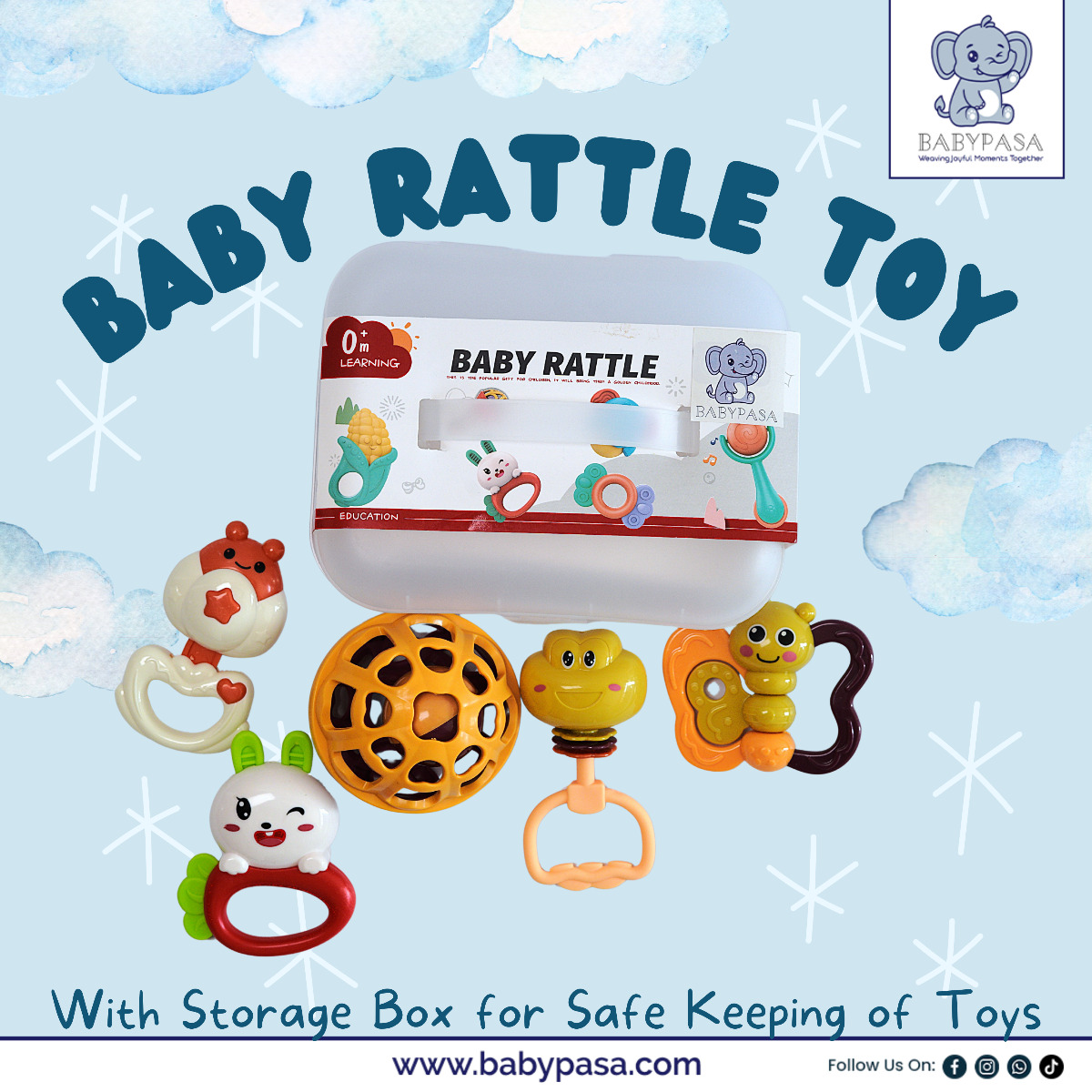
Baby Rattle Box with Storage Box

Rs 1,300 · 3 designs

Builds: Grasping, and learning that shaking makes a sound · goes with “Reach for it”

At home, free: A wooden spoon, or dry rice sealed inside a small steel container.

Worth knowing: Check any home-made shaker is properly sealed.

See it on babypasa.com →
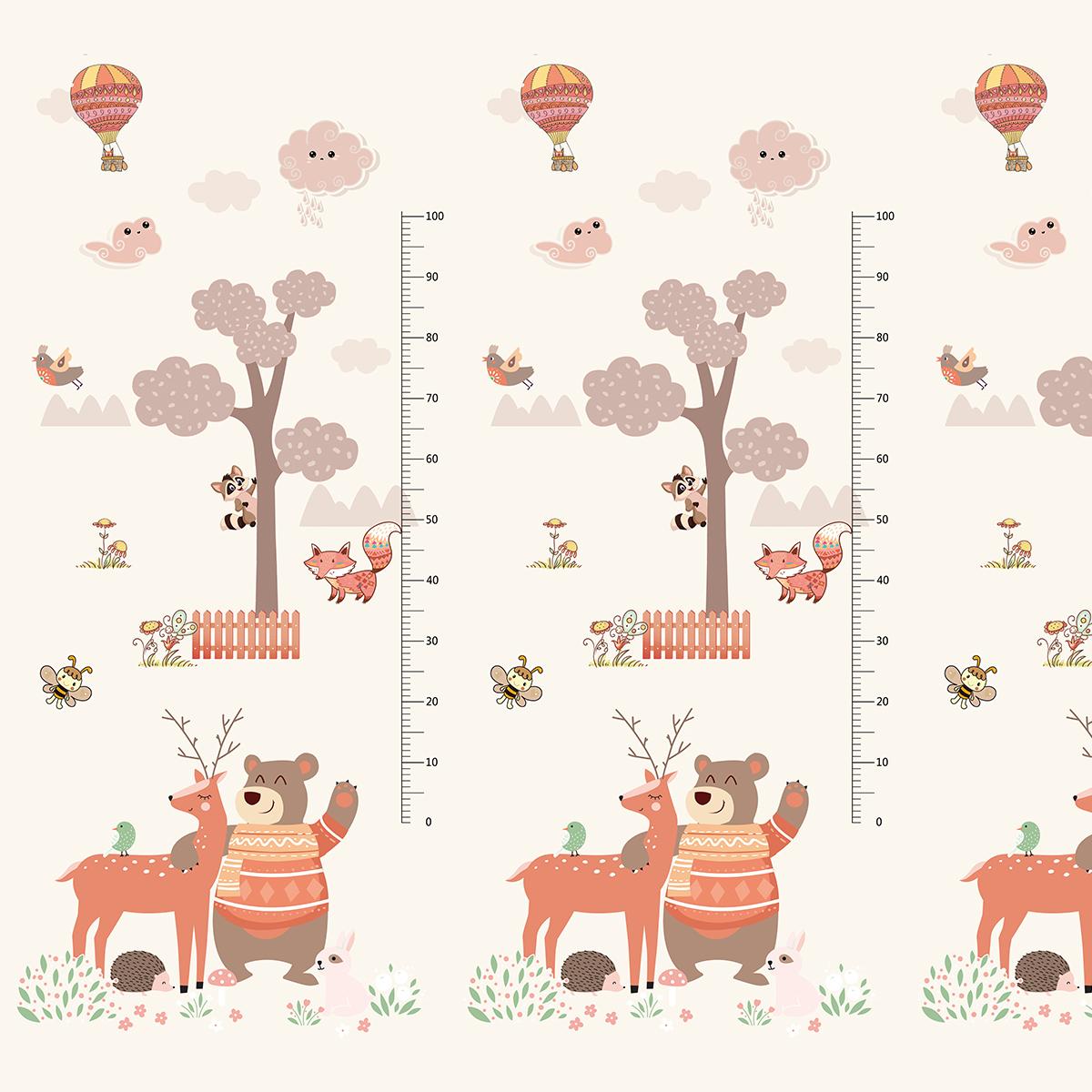
Play Mat - Beer and Deer Series

Rs 1,850 · 4 designs

Builds: Neck and shoulder strength for rolling and sitting · goes with “Tummy time on your chest”

At home, free: A folded quilt or clean dhaka cloth on the floor.

See it on babypasa.com →
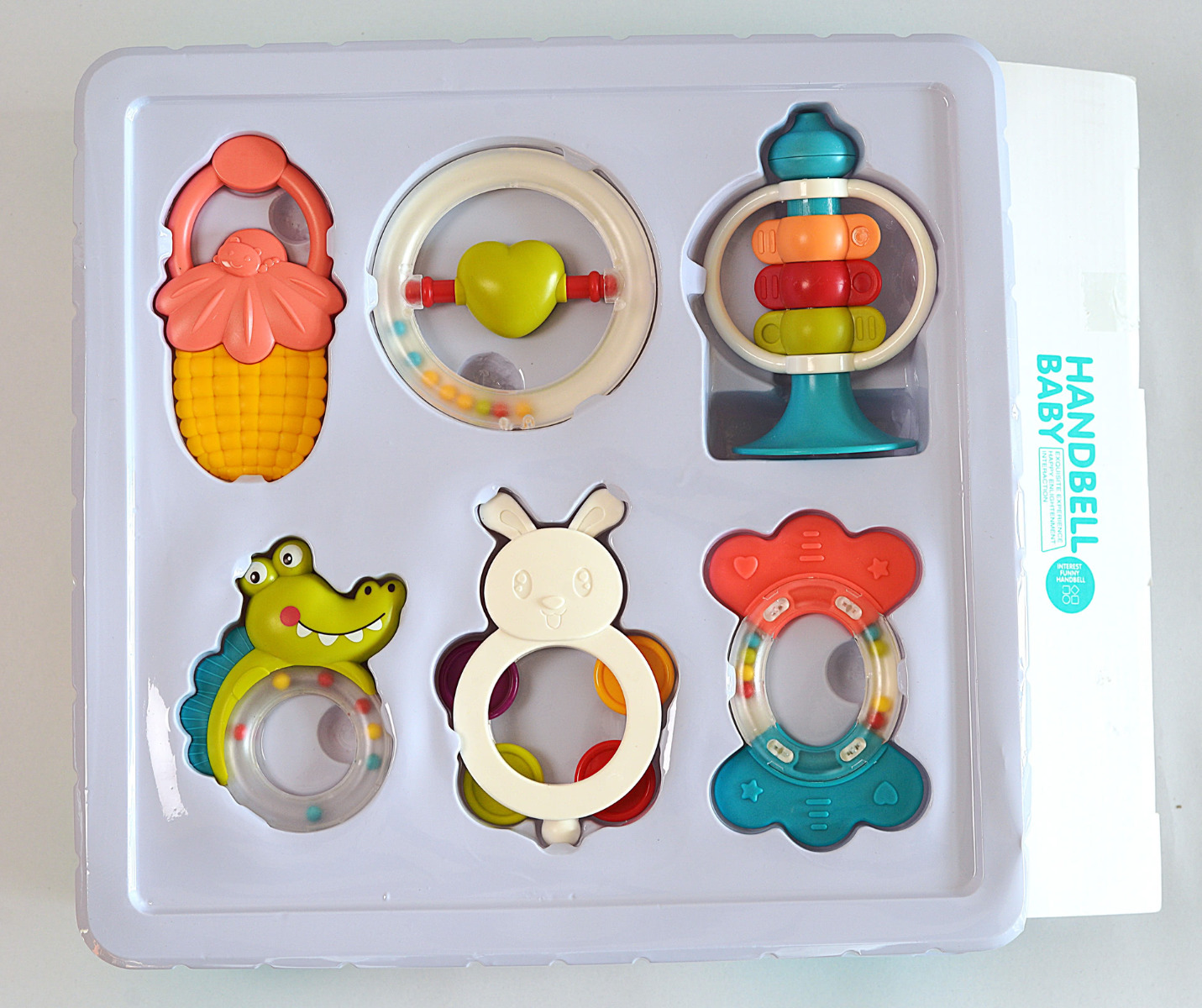
Hand Bell Baby

Rs 1,225

Builds: Cause and effect — I shake, it rings · goes with “Bowl drum”

At home, free: An upturned steel bowl and a wooden spoon.

See it on babypasa.com →
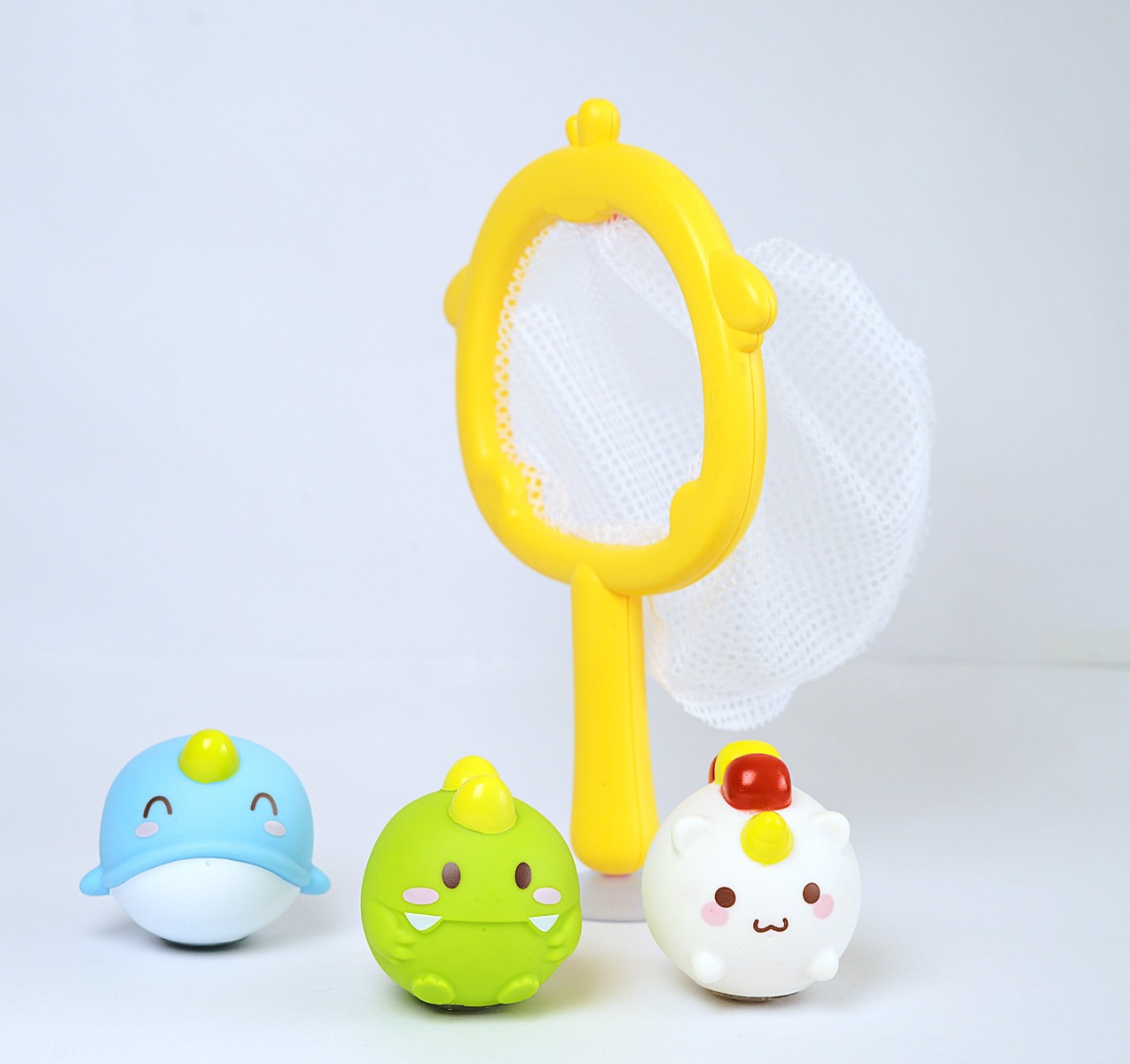
Floating Toy – Fun & Engaging Bath Time for Babies

Rs 700

Builds: Pouring, grabbing, and how water behaves · goes with “Pouring water”

At home, free: Two plastic mugs.

Worth knowing: Never leave a child alone near water, however shallow. Squeeze-type bath toys can grow mould inside — squeeze them dry after every bath.

See it on babypasa.com →
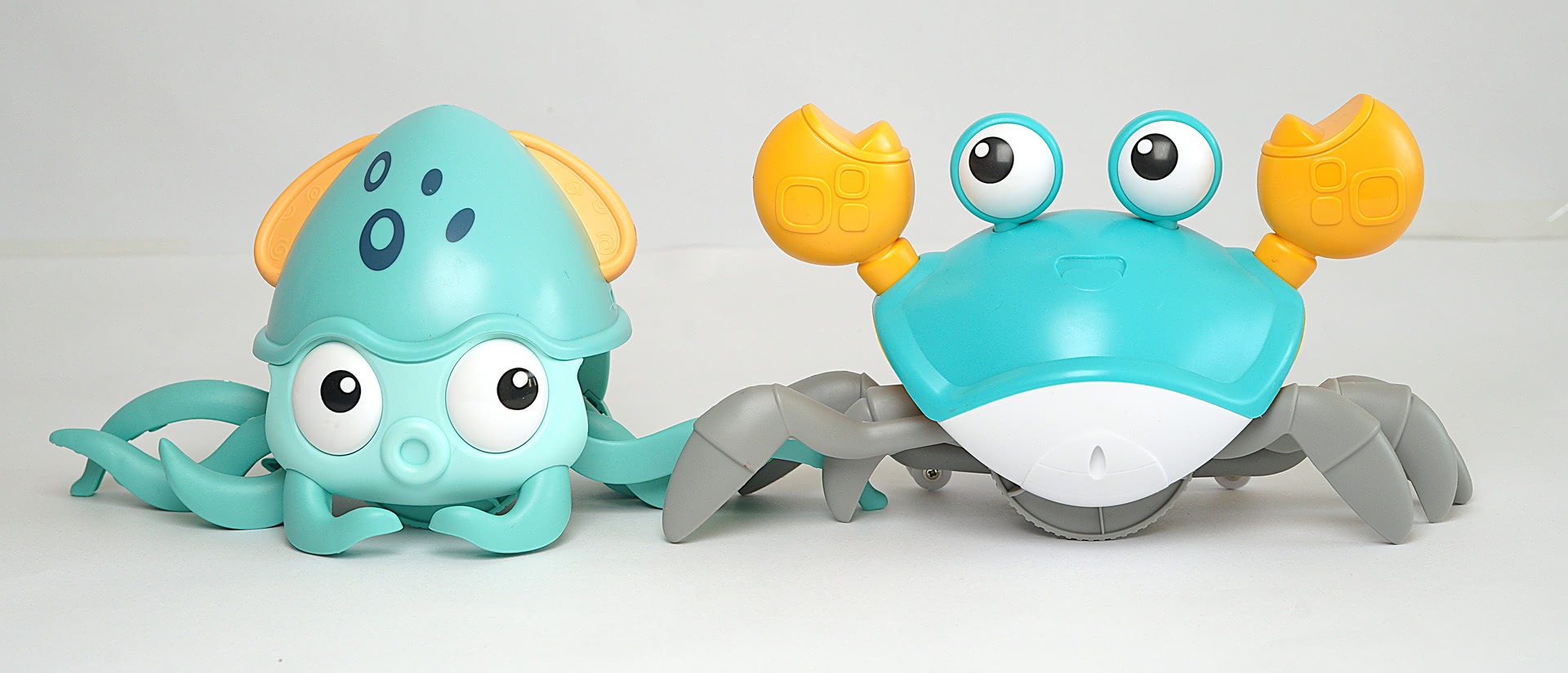
Crawling Octopus- RED

Rs 1,250

Builds: The arm and leg strength for crawling · goes with “Crawl to me”

At home, free: Put something they want just out of reach and sit behind it.

Worth knowing: Best once your baby can already push up on their arms. Let them catch it in the end — the point is confidence, not frustration.

See it on babypasa.com →
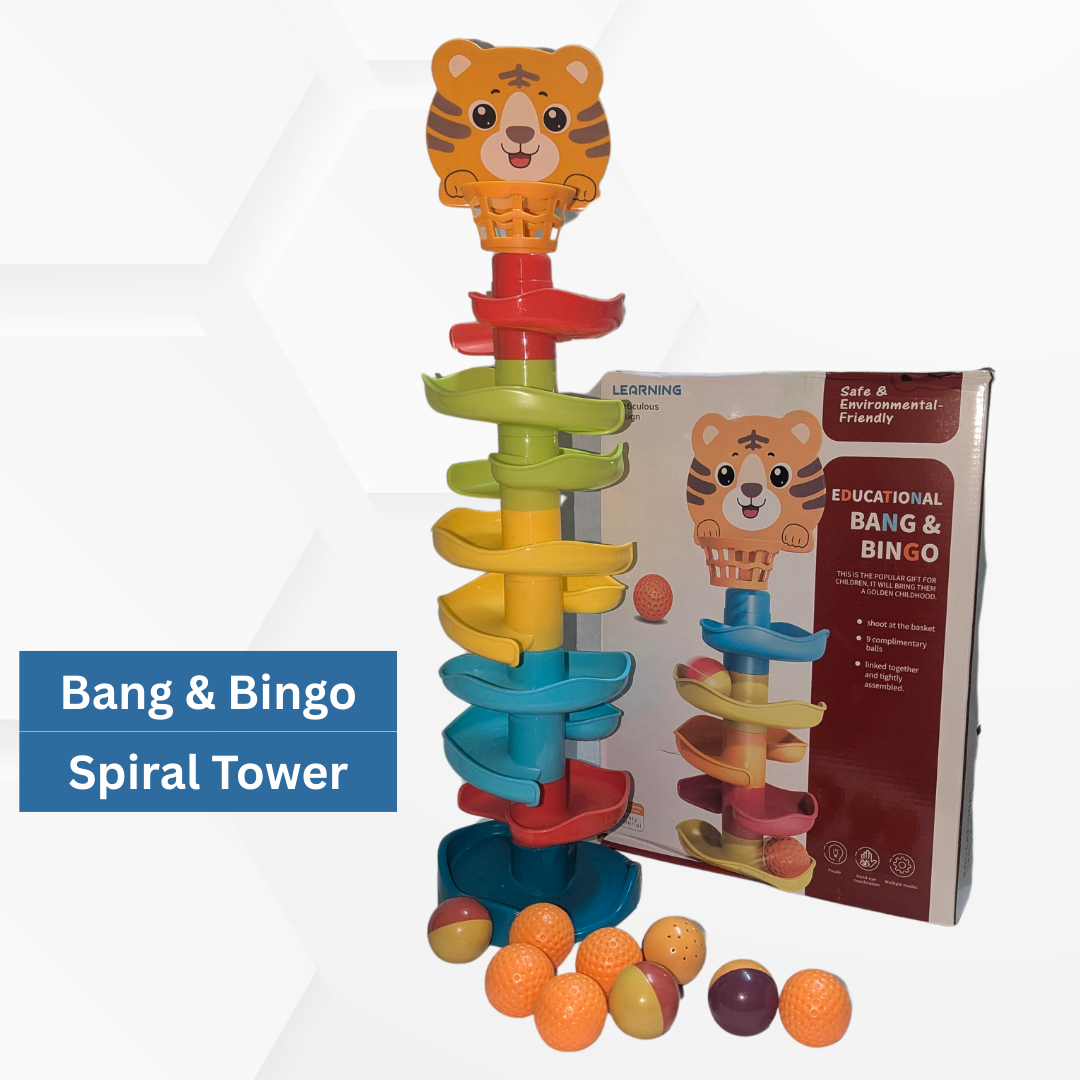
Spiral Tower Bang and Bingo Ball

Rs 1,500

Builds: Aim, release, and watching what happens next · goes with “Stack it, knock it”

At home, free: Stacked steel katoris to knock over, again and again.

Worth knowing: Needs steady sitting, so around 9 months. The katoris genuinely do the same job.

See it on babypasa.com →
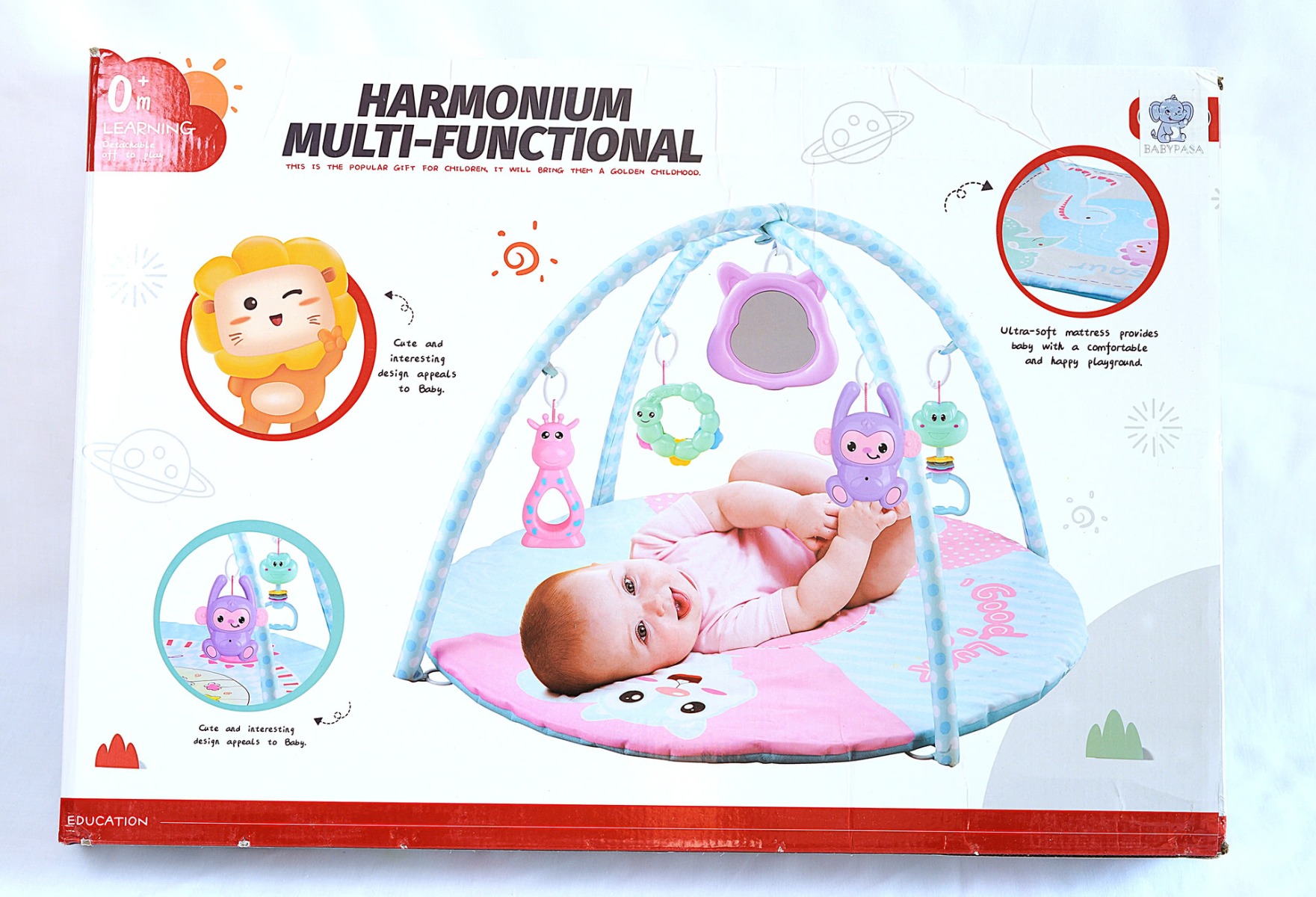
Harmonium Multifunctional - Pink

Rs 2,150

Builds: Rhythm, listening, and pressing with single fingers · goes with “Sing through the day”

At home, free: Your own singing. Nothing beats it at this age.

Worth knowing: Battery toys that play tunes on their own hold attention less than a caregiver singing. Best used together, not handed over.

See it on babypasa.com →
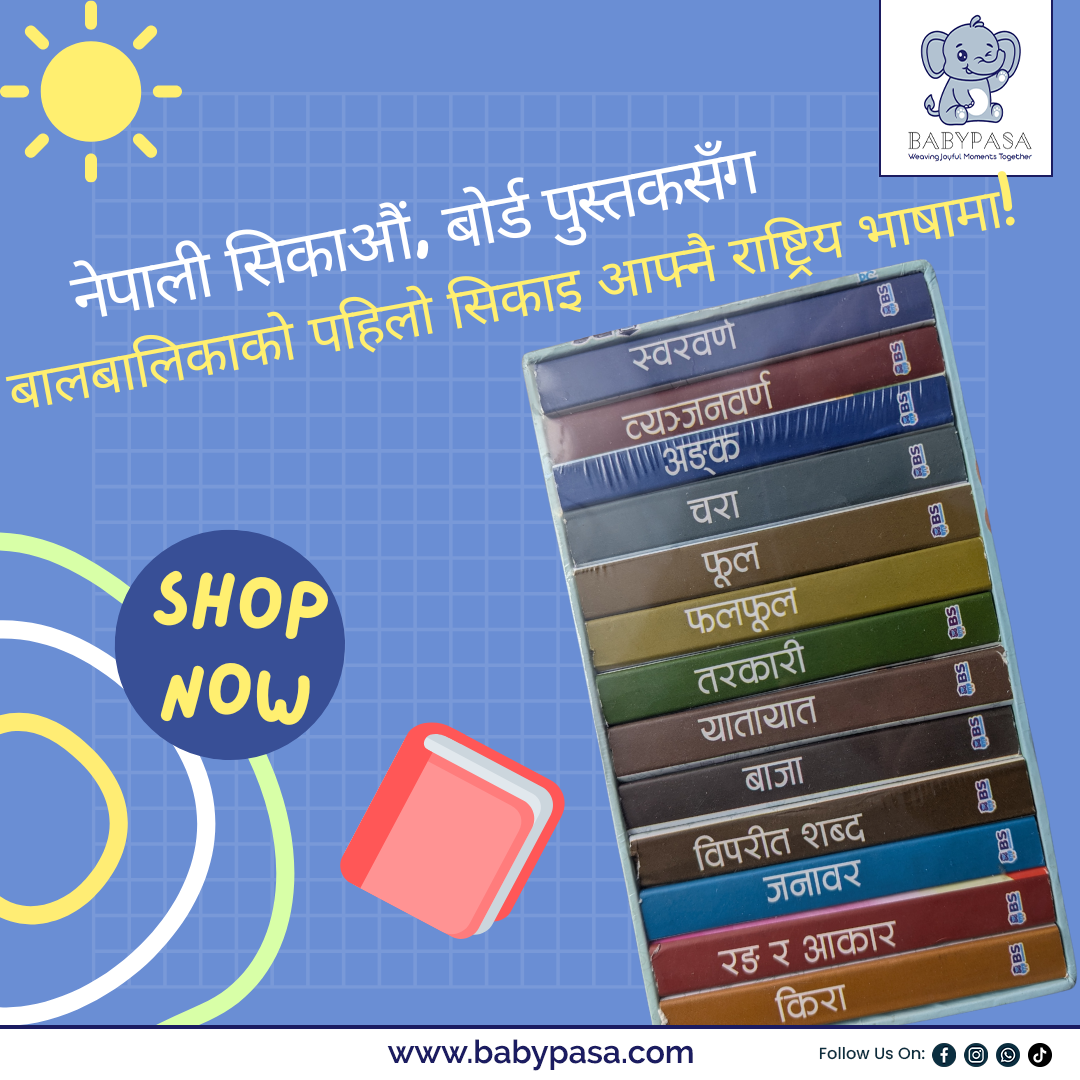
Mero Pahilo Pustak Mala

Rs 2,210

Builds: First words in Nepali, and pointing at pictures · goes with “Name what they point at”

No home substitute. A steel bowl can replace most toys. It cannot replace a book in your own language.

Worth knowing: At this age you are not reading the words — you are naming what they point at. Expect to "read" it in two minutes.

See it on babypasa.com →
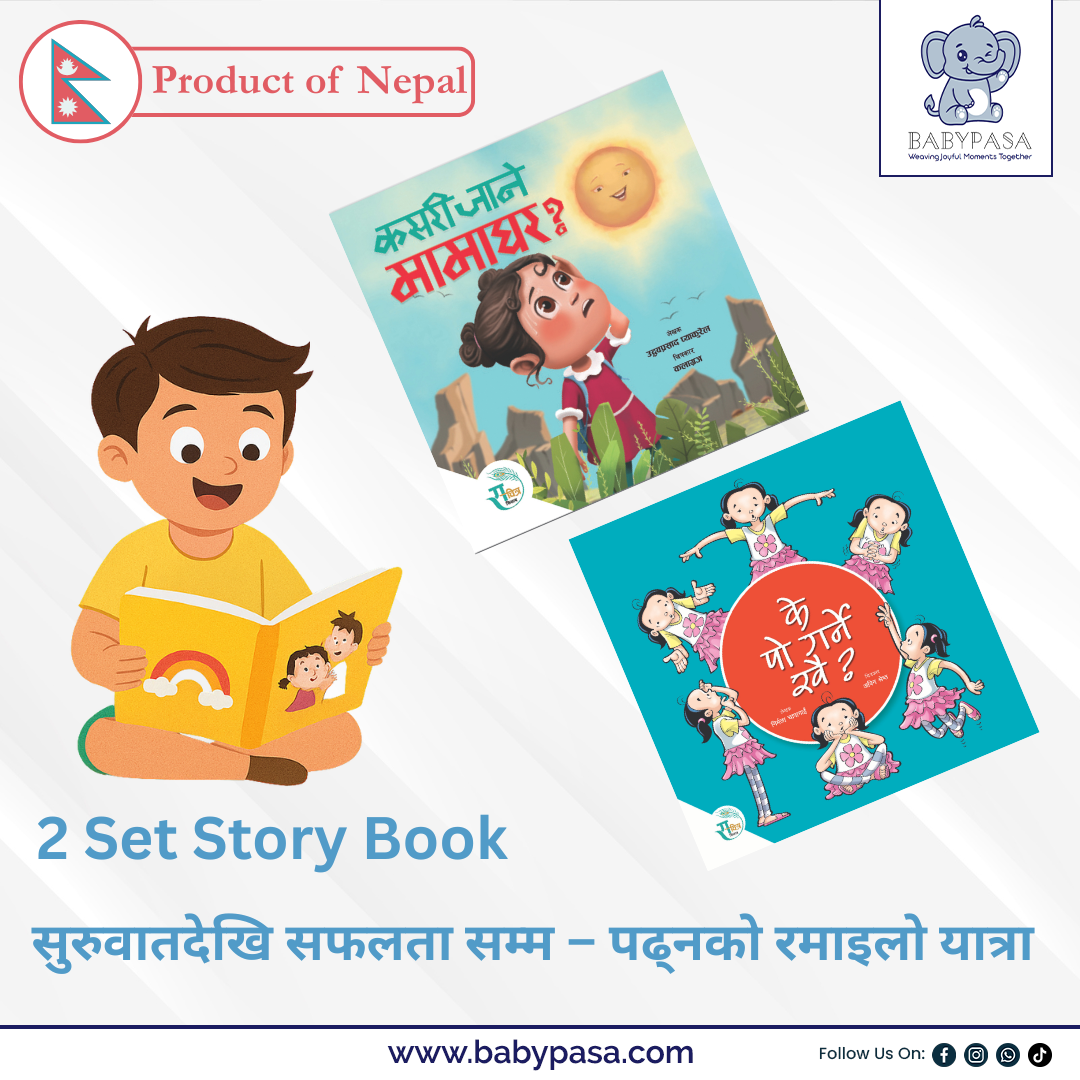
Suruwat Set The Beginning

Rs 525

Builds: Story sense in Nepali — large fonts, two short books · goes with “Tell the story from the pictures”

No home substitute. A steel bowl can replace most toys. It cannot replace a book in your own language.

Worth knowing: The first of a three-part series. Start here rather than with the later sets.

See it on babypasa.com →
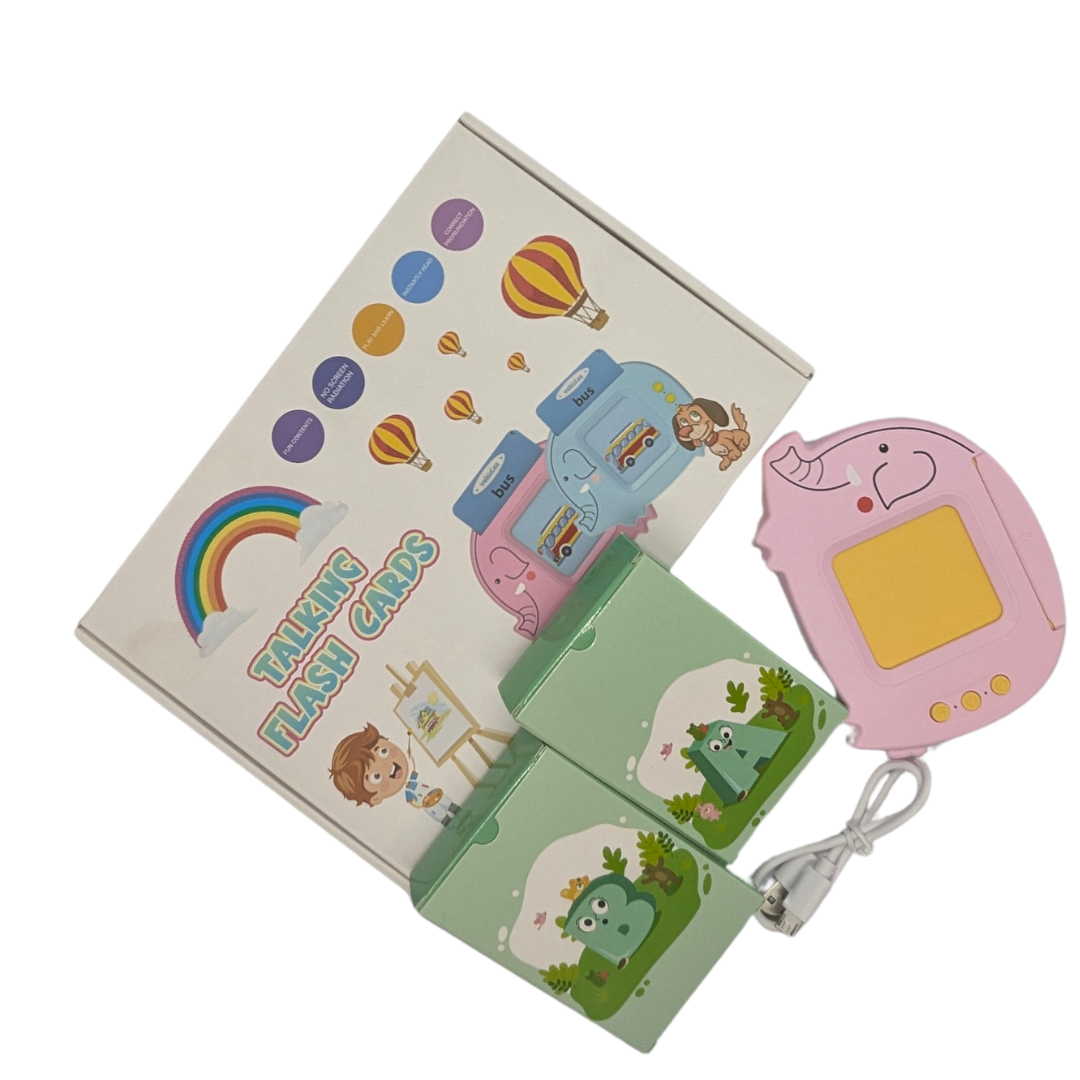
Talking Flash Card - Baby Pink Elephant Series

Rs 620 · 3 designs

Builds: Vocabulary, with sound to hold attention · goes with “Name what they point at”

At home, free: Naming whatever your child points at, all day, for free.

See it on babypasa.com →
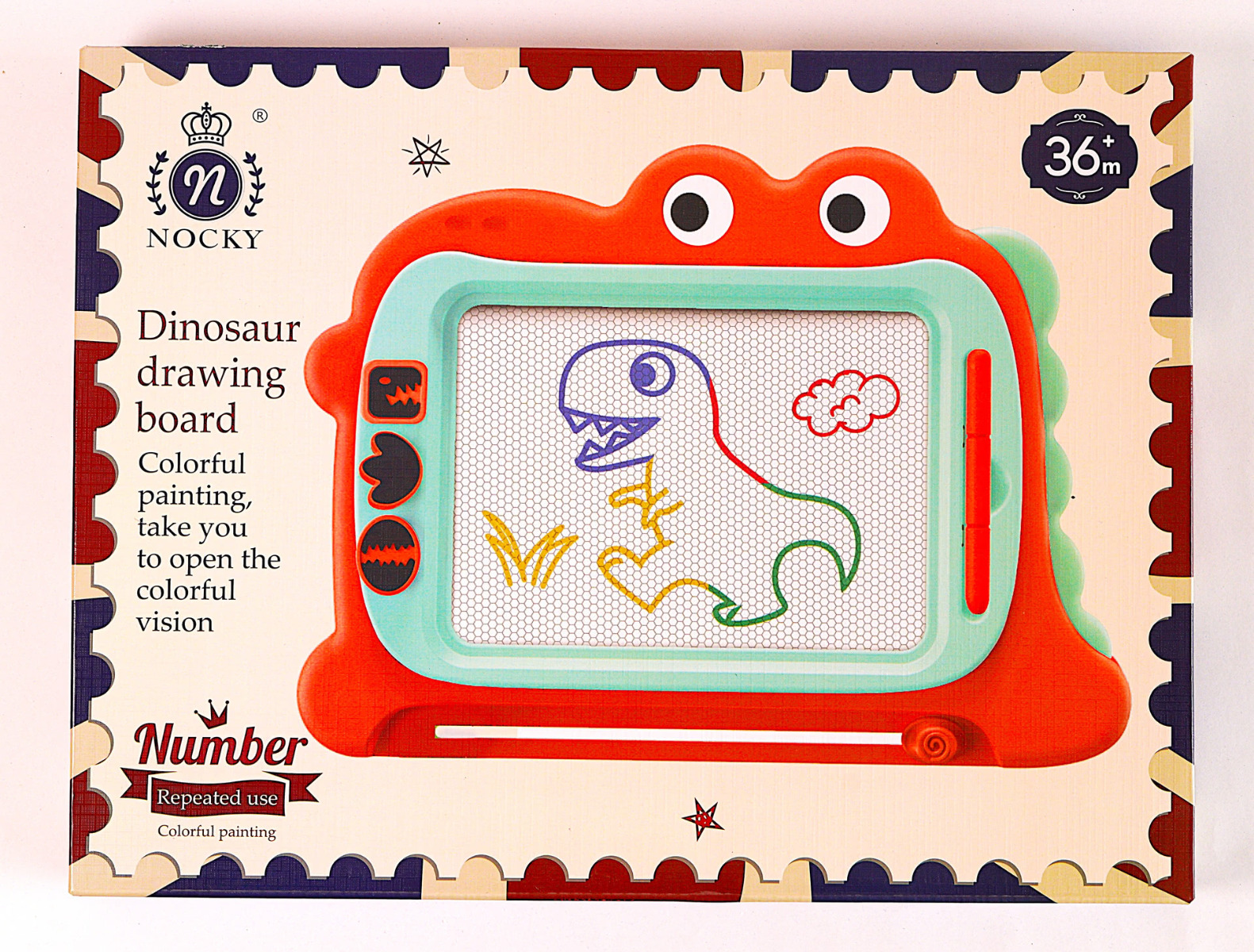
Dinosaur Colorful Drawing Board - Orange Series

Rs 1,250 · 2 designs

Builds: Grip and control — the hand strength writing needs · goes with “Scribble together”

At home, free: Paper and one crayon.

See it on babypasa.com →
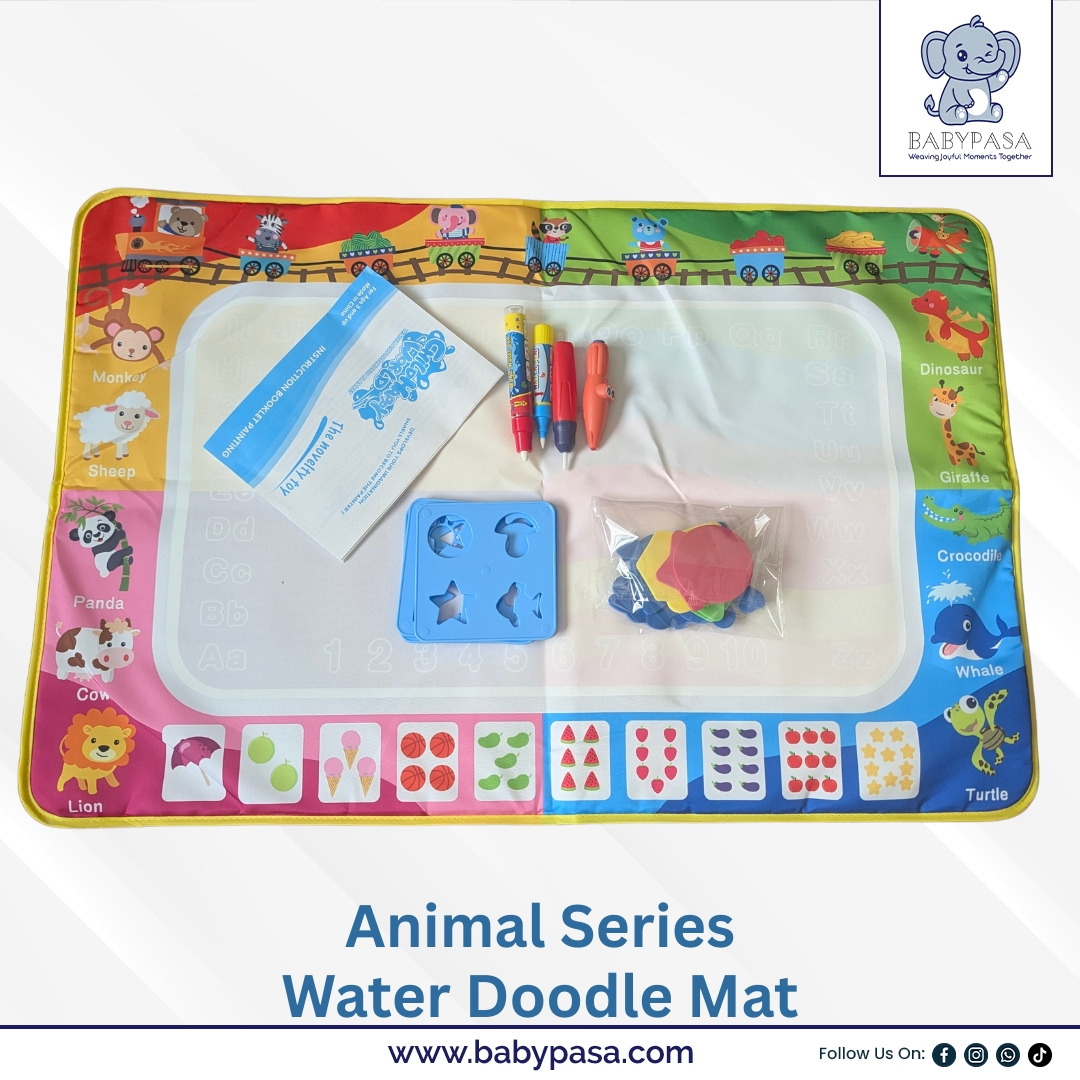
Doodle Mat with Pen-Animal Series

Rs 1,550 · 2 designs

Builds: Grip and control, with less mess than paper · goes with “Scribble together”

At home, free: Paper and one crayon.

Worth knowing: The alphabet and number versions are for older children — at 18 months the value is the scribbling, not the letters.

See it on babypasa.com →
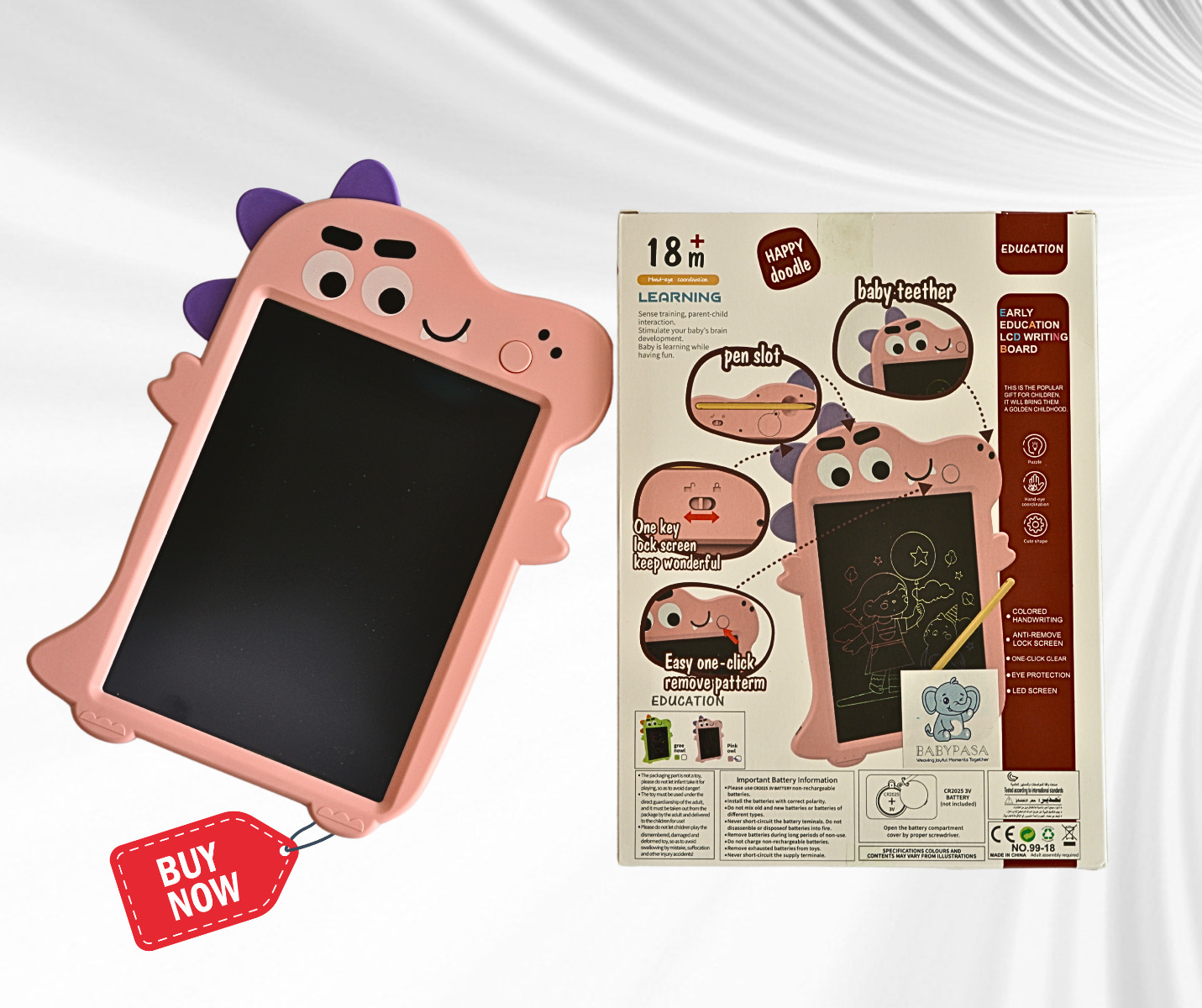
Early Education LCD Writing Board - Baby Pink Dino Theme

Rs 500 · 2 designs

Builds: Drawing practice with nothing to clean up · goes with “Scribble together”

At home, free: Paper and one crayon.

See it on babypasa.com →
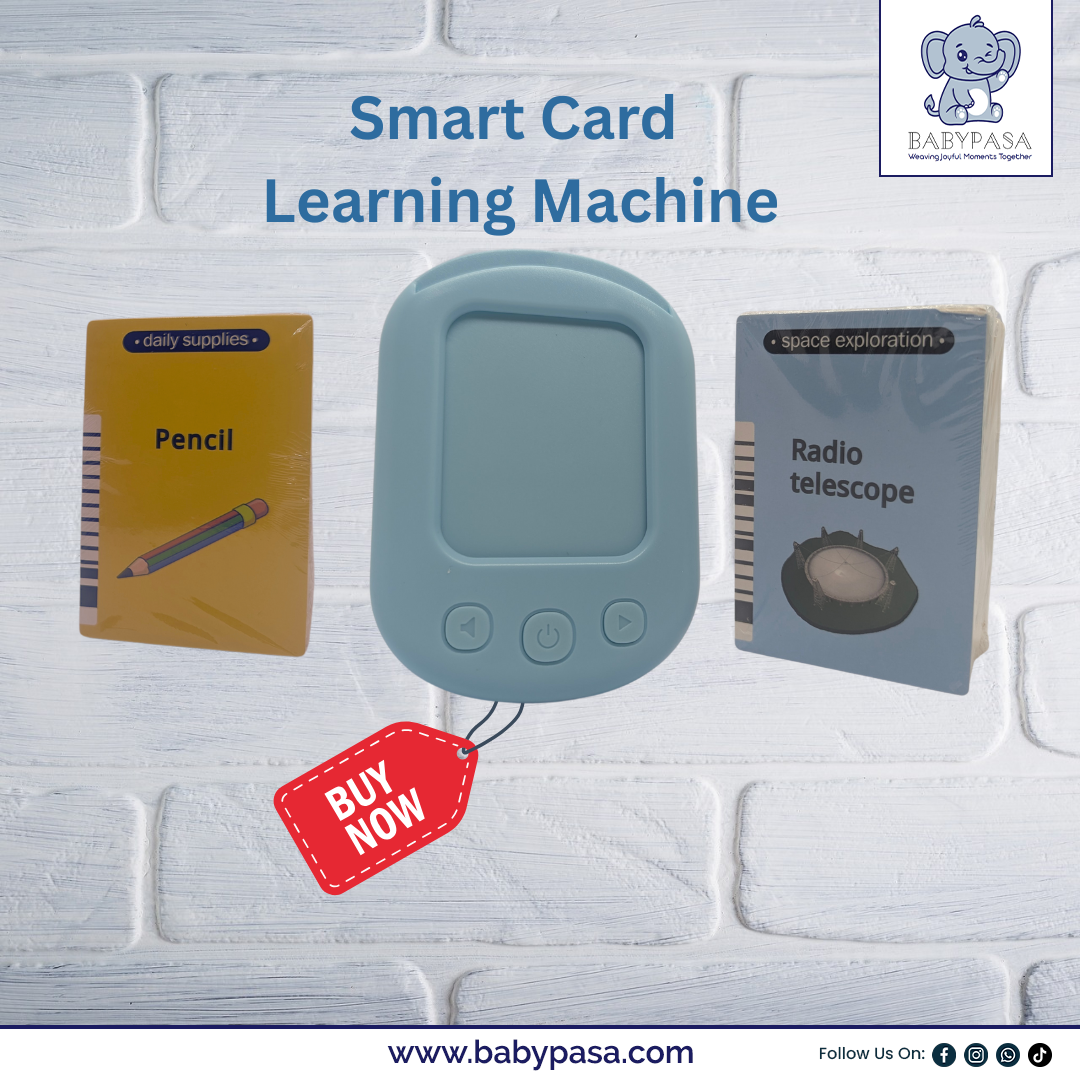
Smart Card Learning Machine

Rs 900

Builds: Words and pictures a child can work through alone · goes with “Name what they point at”

At home, free: Naming things together, and any picture book.

Worth knowing: Good for independent play. Still weaker than talking with you.

See it on babypasa.com →
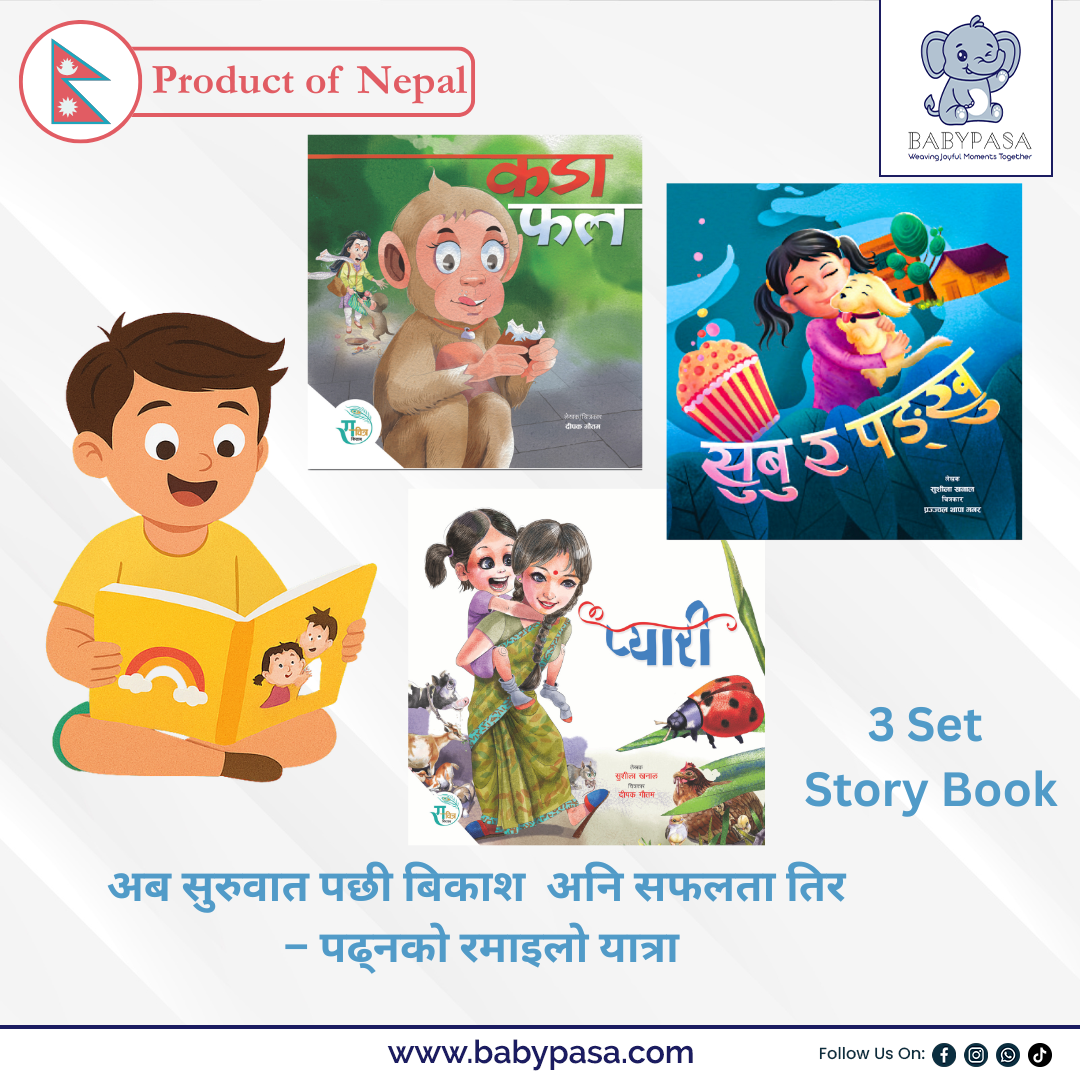
Bikash Set – The Development

Rs 860

Builds: Longer Nepali stories, once short ones hold attention · goes with “Tell the story from the pictures”

No home substitute. A steel bowl can replace most toys. It cannot replace a book in your own language.

Worth knowing: Second in the series. Too long for most under-2s.

See it on babypasa.com →
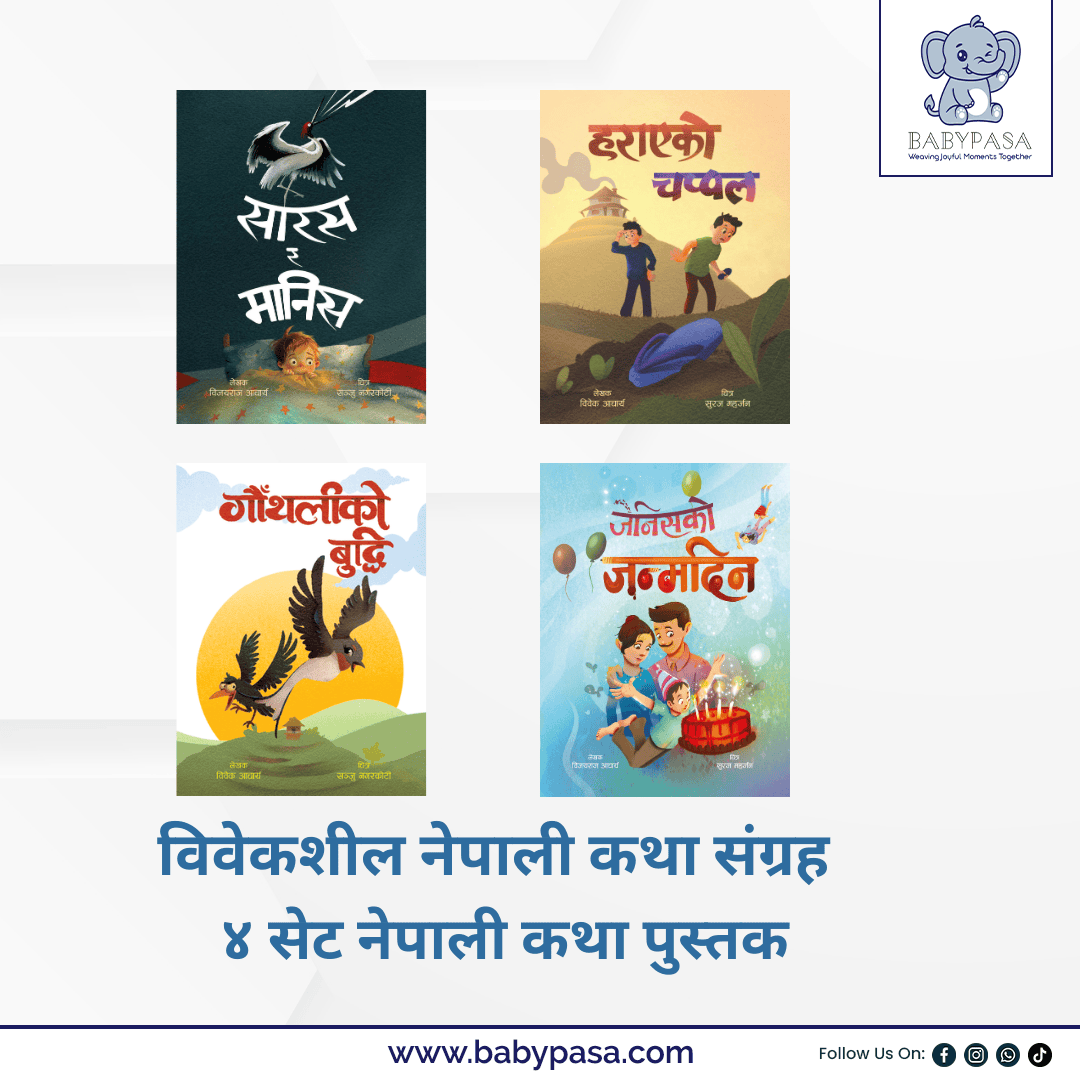
Bibeksheel Nepali Story - 4 Set Book

Rs 1,200

Builds: Nepali stories with something to talk about afterwards · goes with “Tell the story from the pictures”

No home substitute. A steel bowl can replace most toys. It cannot replace a book in your own language.

See it on babypasa.com →
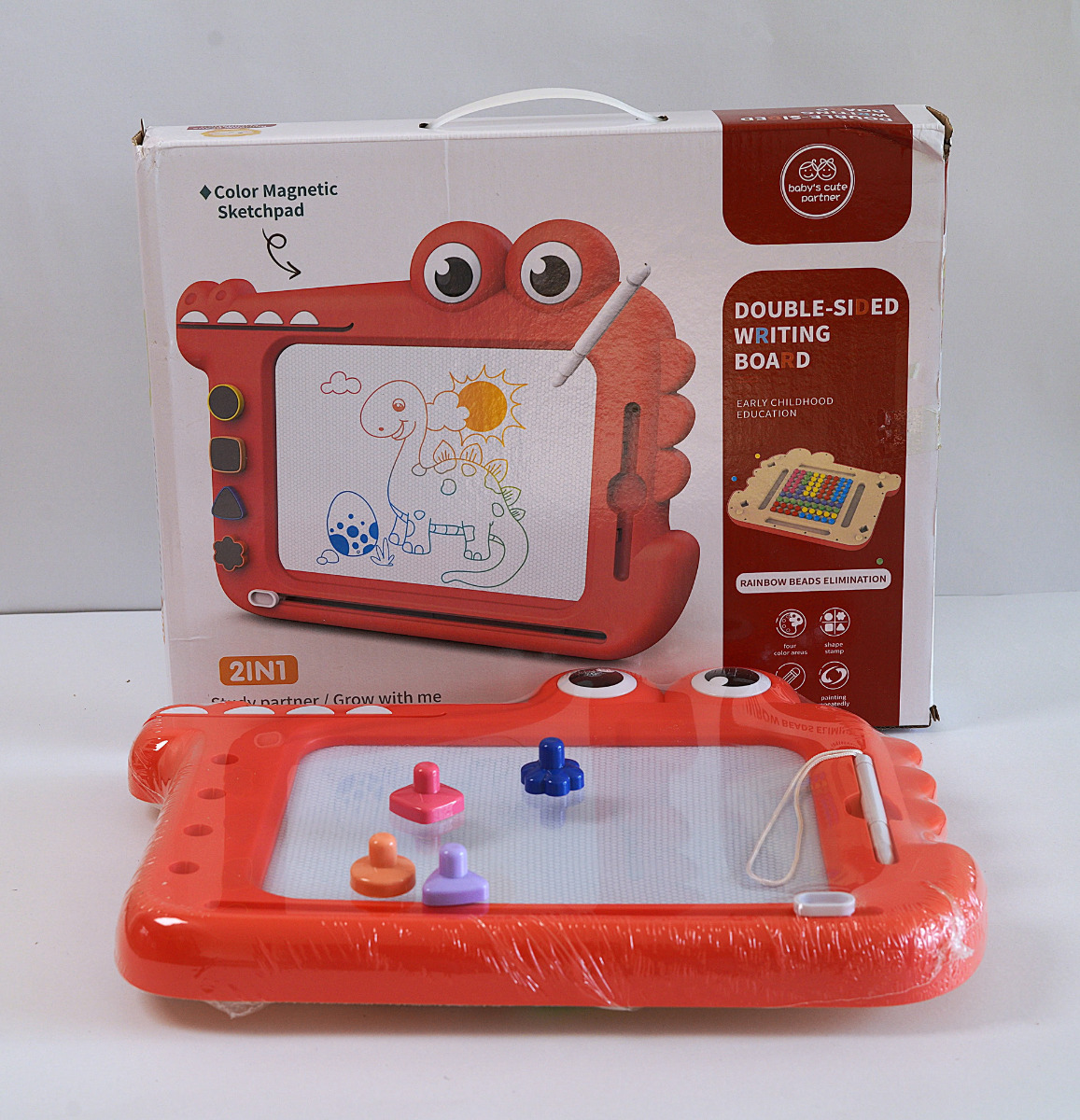
Double Sided Writing Board - Red

Rs 1,750 · 2 designs

Builds: Standing at a board — a different grip from sitting at paper · goes with “Scribble together”

At home, free: Paper on the floor.

See it on babypasa.com →
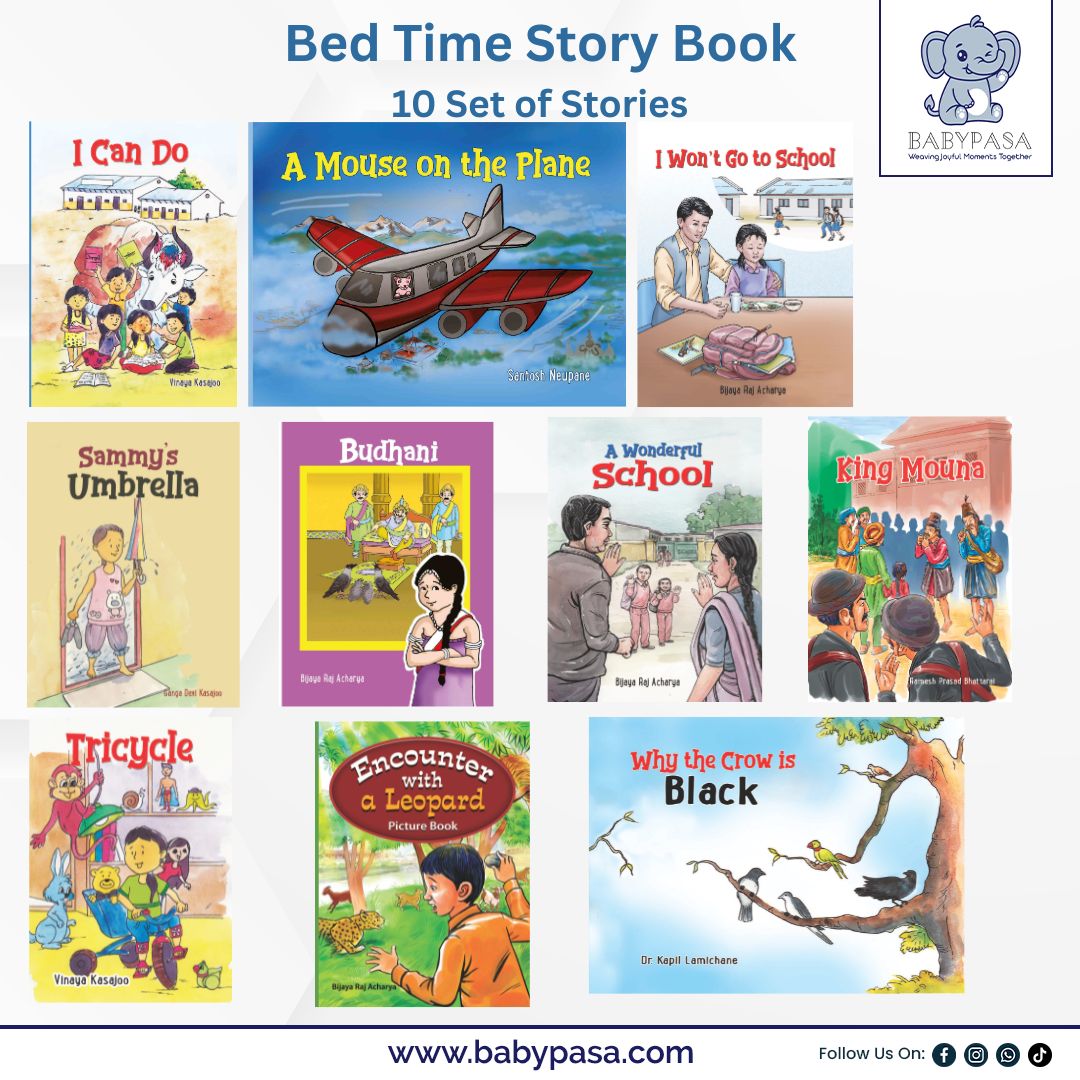
English Bed Time Story - 10 Sets

Rs 2,200

Builds: English stories alongside Nepali ones · goes with “Tell the story from the pictures”

No home substitute. A steel bowl can replace most toys. It cannot replace a book in your own language.

Worth knowing: Children handle two languages well. Reading in the language you are most comfortable in matters more than which one it is.

See it on babypasa.com →
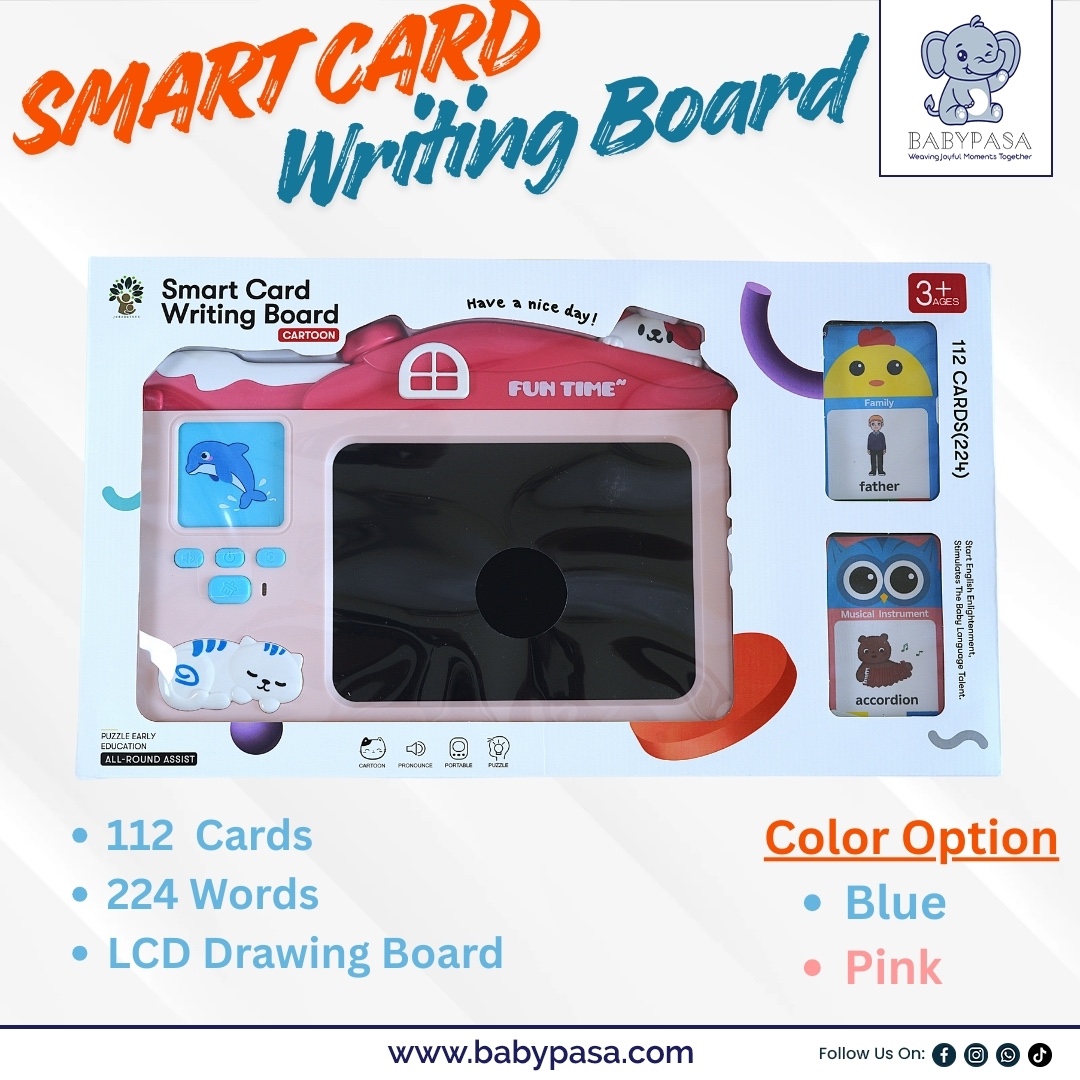
Smart Card Writing Board - Baby Pink Series

Rs 2,399

Builds: Letter tracing with a guide · goes with “Scribble together”

At home, free: Paper and a crayon, tracing letters you draw first.

Worth knowing: Only once free scribbling is comfortable. Tracing too early puts children off.

See it on babypasa.com →
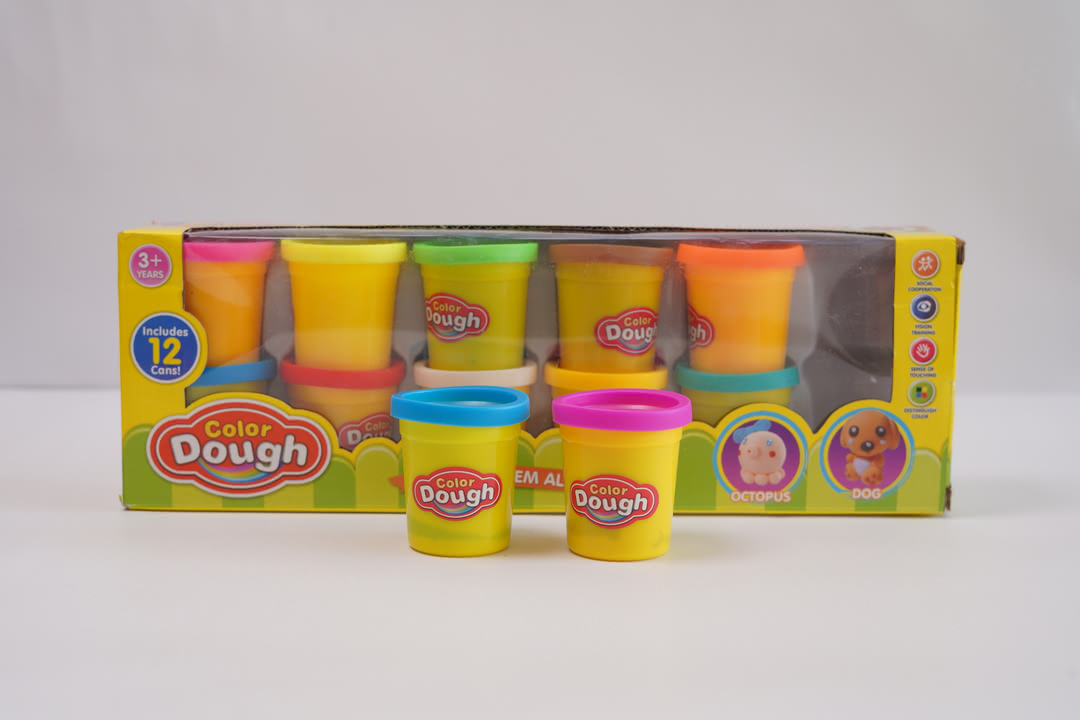
Color Dough

Rs 1,000

Builds: Squeezing, rolling and pinching — real hand strength · goes with “Pretend cooking”

At home, free: Atta dough. Costs almost nothing, they can help make it, and it can be offered earlier than a bought set.

Worth knowing: Bought dough sets are for 3 years and over. Always with an adult, and never for a child who still puts things in their mouth.

See it on babypasa.com →
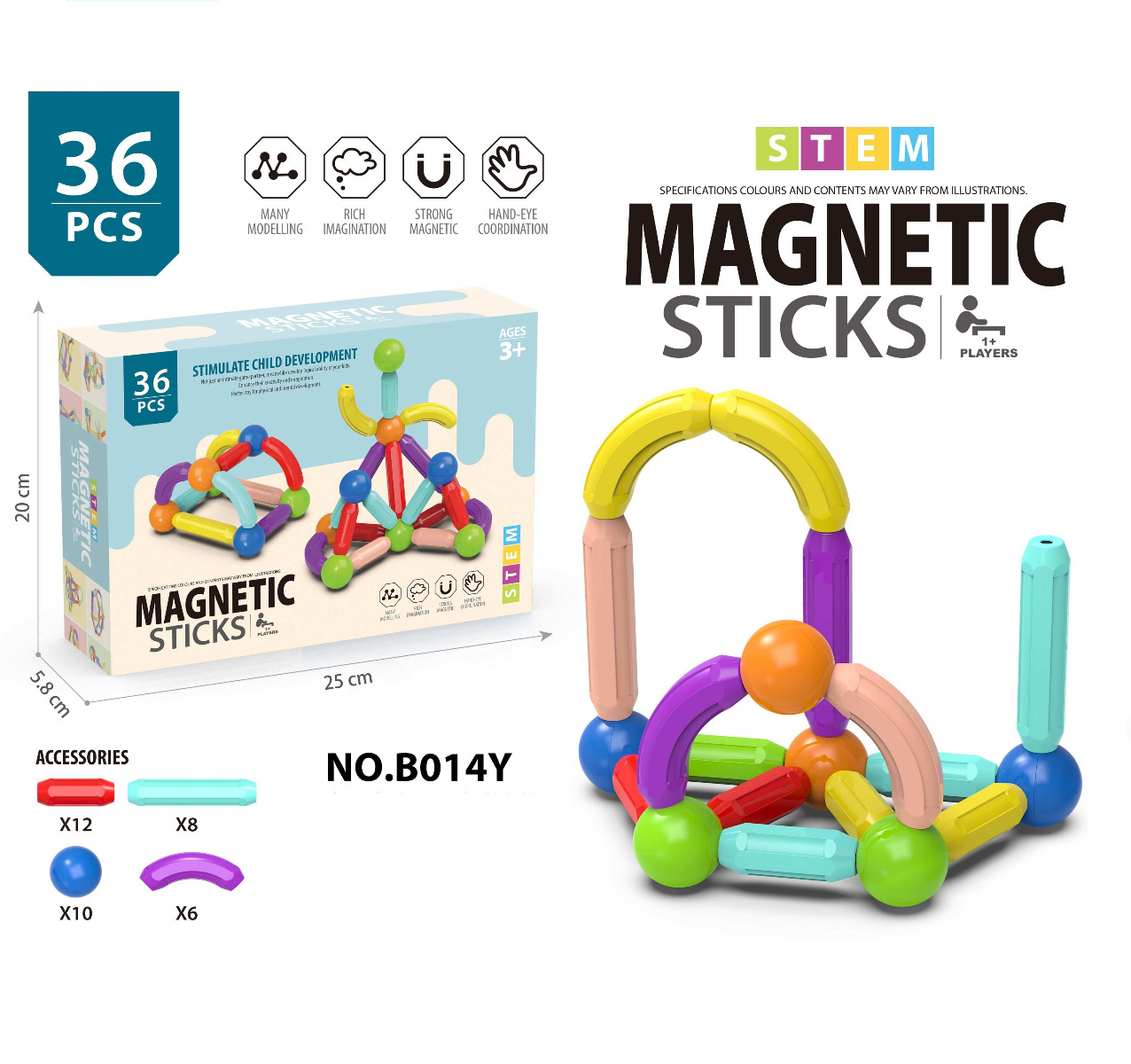
Magnetic Block - 36 pcs

Rs 1,100 · 2 designs

Builds: Shape, symmetry and building in three dimensions · goes with “Sorting into piles”

At home, free: Cardboard boxes and cushions, for the same building instinct.

Worth knowing: Strictly 3 years and over. If a child swallows two magnets they can attract through the gut wall and cause serious injury. This is not a formality — check the set is complete after play.

See it on babypasa.com →
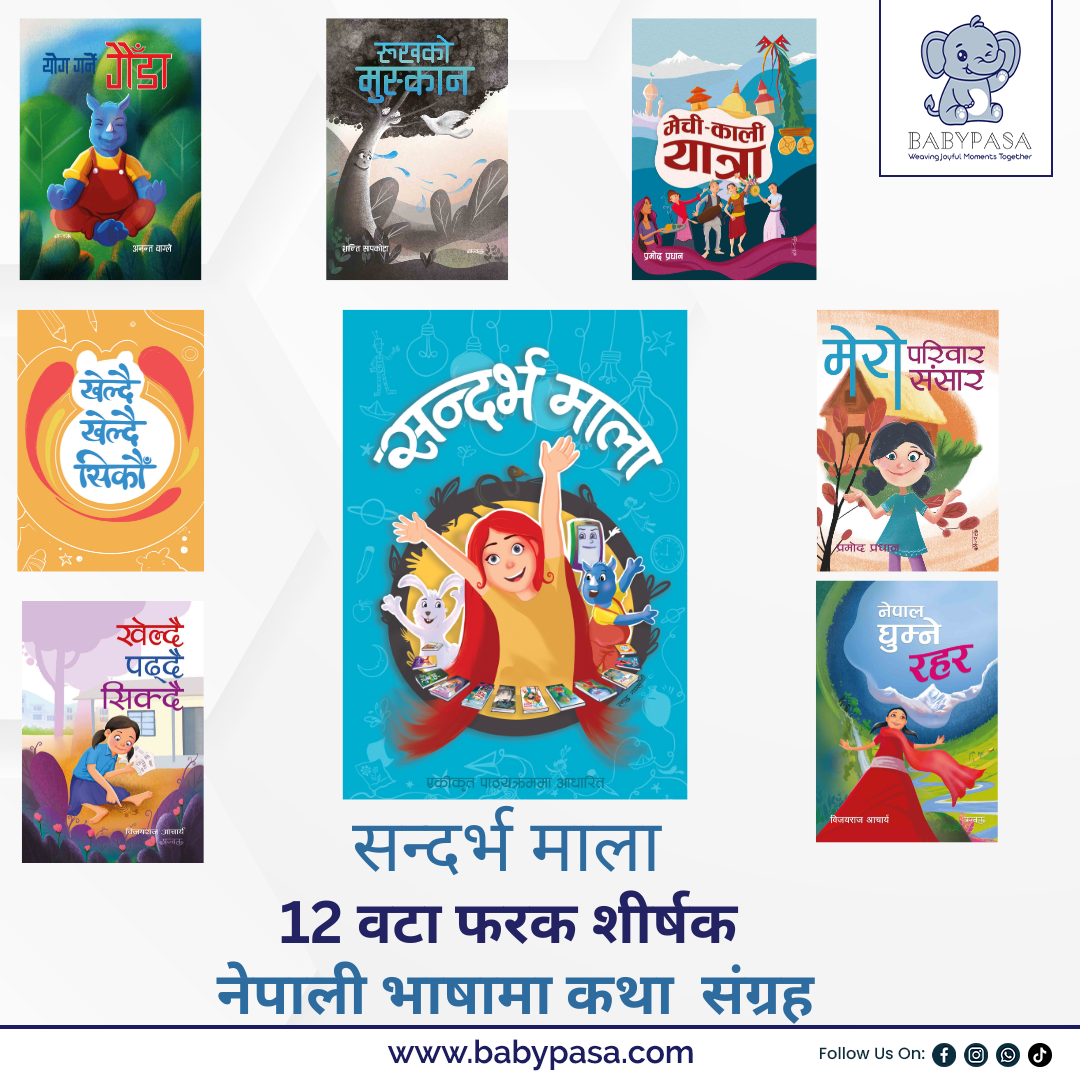
Sandarva Mala - 12 Set Nepali Story Book

Rs 2,100

Builds: Twelve Nepali stories — enough to last · goes with “Tell the story from the pictures”

No home substitute. A steel bowl can replace most toys. It cannot replace a book in your own language.

Worth knowing: A large set. Better as a gift than as a first purchase.

See it on babypasa.com →
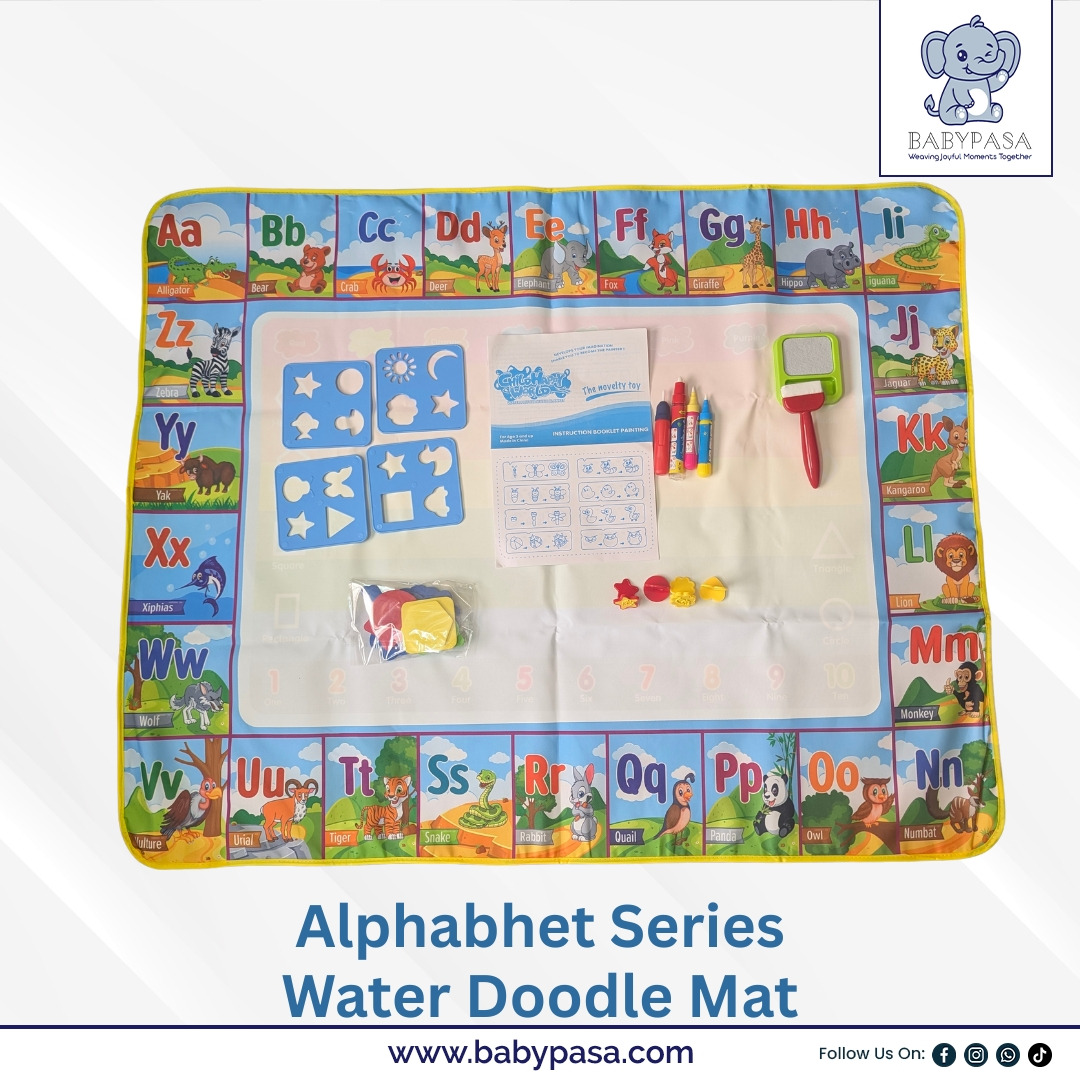
Doodle Mat with Pen-Alphabet Series

Rs 2,200

Builds: Letter shapes, once scribbling is comfortable · goes with “Scribble together”

At home, free: Paper and one crayon.

See it on babypasa.com →
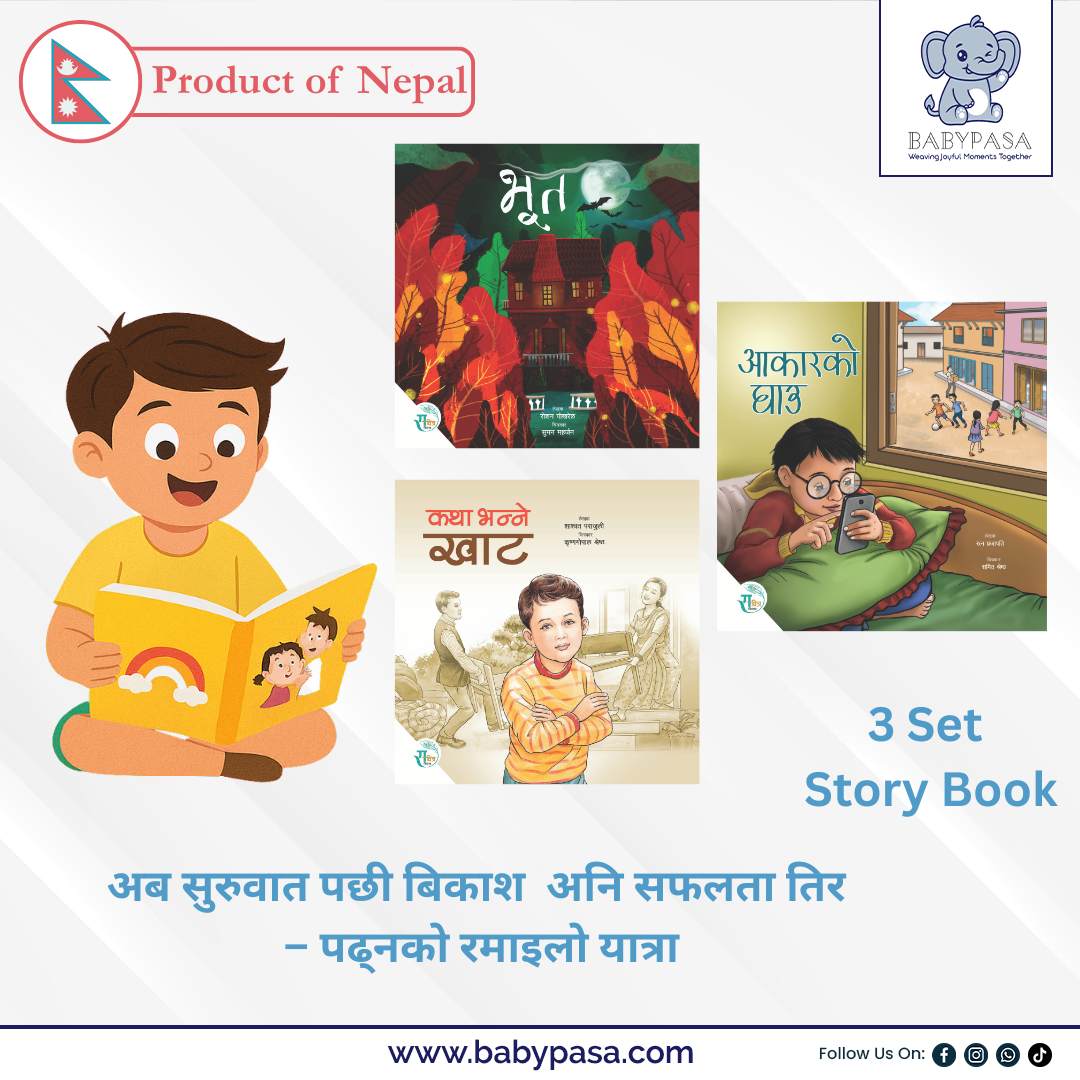
Safalta Set – The Accomplished

Rs 760

Builds: Nepali stories for a child starting to follow plot · goes with “Tell the story from the pictures”

No home substitute. A steel bowl can replace most toys. It cannot replace a book in your own language.

Worth knowing: Third in the series — the most demanding of the three.

See it on babypasa.com →
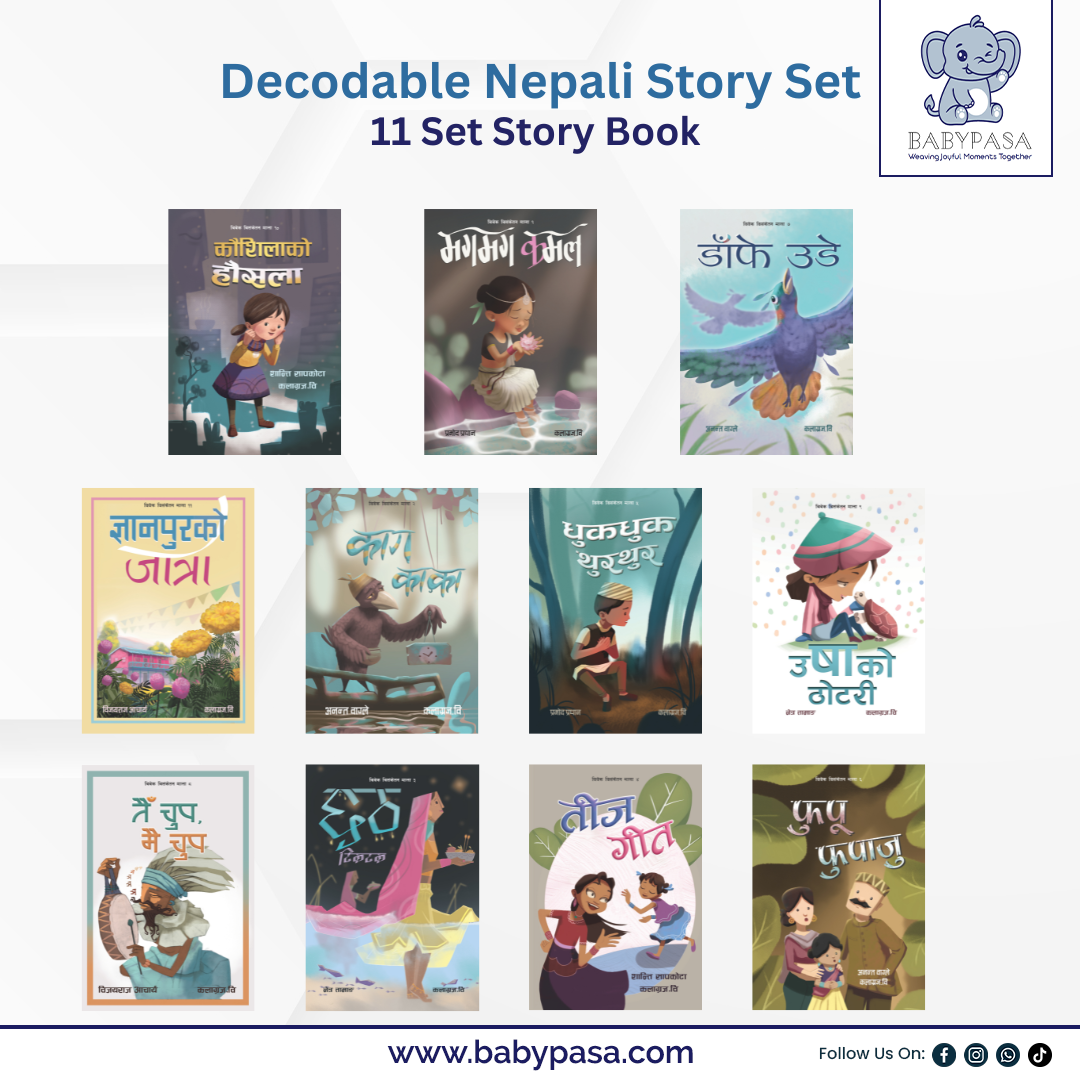
Decodable Nepali Stories - 11 Set of Story Books

Rs 1,430

Builds: Reading Nepali themselves, not just being read to · goes with “Tell the story from the pictures”

No home substitute. A steel bowl can replace most toys. It cannot replace a book in your own language.

Worth knowing: For a child already learning letters. Too early and it becomes a chore.

See it on babypasa.com →

About these ideas

These are ideas, not a checklist. Children develop at different speeds, and play should feel enjoyable for both of you. Follow your baby's lead — if they are not interested today, try again in a week.

You will notice nothing here asks you to buy anything. That is on purpose. What matters most for a young child is a caring adult paying attention — a steel bowl and ten unhurried minutes beat an expensive toy almost every time.

Wondering what comes next for your child? See the milestone tracker →

© BabyPasa Blog

Join Our Community